Splitting the Deed: Tokenized Fractional Ownership and the New Path Into Virtual Real Estate
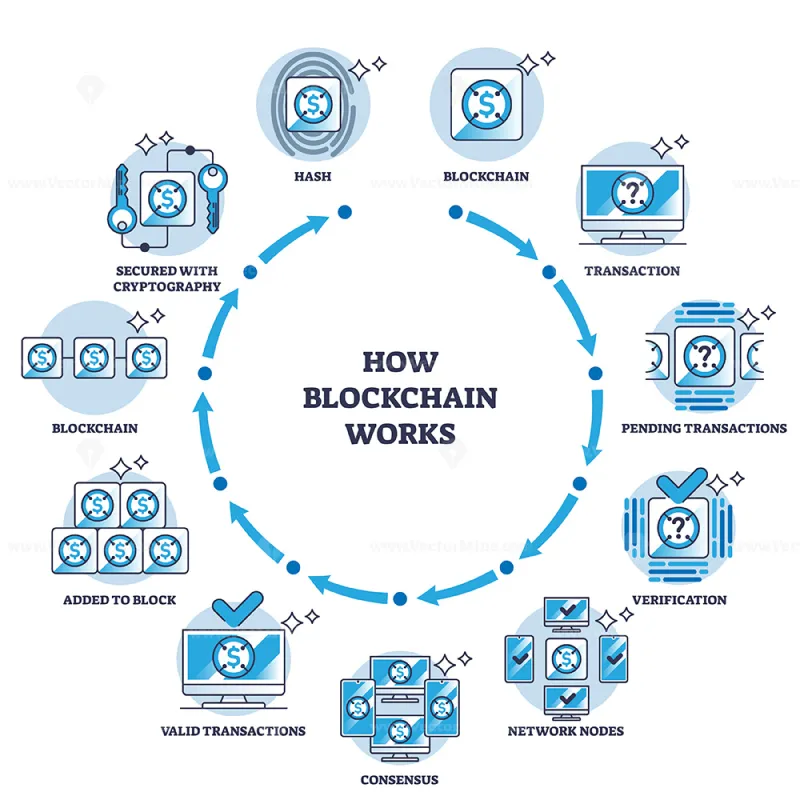
Photo: blockchain real estate tokenization digital property ownership technology, via vectormine.b-cdn.net
At the height of the metaverse land rush in late 2021, a single parcel adjacent to Snoop Dogg's virtual estate in The Sandbox sold for approximately $450,000. A plot near the center of Decentraland's Vegas City district changed hands for $2.4 million. These transactions captured headlines and created the impression that metaverse real estate was an asset class reserved for the wealthy.
That impression is becoming outdated. A growing cohort of blockchain protocols has introduced fractional ownership mechanics that allow retail investors to purchase tokenized shares of premium virtual properties—sometimes for as little as a few hundred dollars. The structural model borrows from traditional real estate investment trusts and applies it to on-chain assets, creating a new category of digital investment that carries both genuine opportunity and significant complexity.
Understanding the mechanics, the precedents, and the risks is essential before committing capital to any fractional metaverse real estate product.
How Tokenized Fractional Ownership Actually Works
At its core, fractional metaverse real estate operates through smart contracts that divide the ownership rights of a single virtual parcel into multiple fungible or semi-fungible tokens. Each token represents a proportional claim on the underlying asset—and, in well-designed systems, on any revenue that asset generates.
The process typically begins when a property owner or a dedicated protocol deposits a virtual land NFT into a smart contract. That contract then mints a predetermined number of fractional tokens, which are distributed to investors through a sale or auction. The original NFT remains locked in the contract until a governance mechanism—usually a supermajority vote among token holders—decides to sell the underlying asset or restructure the position.
Platforms like Fractional.art (now rebranded as Tessera) pioneered this model for Ethereum-based NFTs, including virtual land assets. More recently, metaverse-specific protocols have emerged that layer additional functionality onto the basic fractionalization model, including rental income distribution, advertising revenue sharing from virtual billboards, and governance rights over how the underlying parcel is developed.
The smart contract mechanics matter enormously to investor outcomes. Contracts that include automatic revenue distribution, transparent fee structures, and clear liquidation pathways are materially safer than opaque arrangements where the original depositor retains disproportionate control. Reviewing the contract code—or at minimum, confirming that a reputable third-party audit has been conducted—is a non-negotiable step for any serious investor.
Case Studies Worth Examining
Several fractional virtual real estate projects have generated enough transaction history to evaluate critically.
Metaverse Group, a subsidiary of Tokens.com, acquired a portfolio of Decentraland properties and explored fractionalized exposure vehicles for retail investors. While the company's overall asset valuations declined significantly from 2022 peaks, the underlying model—aggregating premium parcels and offering proportional stakes—demonstrated that institutional-grade metaverse real estate could be structured for broader participation.
The Sandbox has seen multiple community-organized fractionalization initiatives, particularly around parcels in high-traffic districts near established gaming experiences. In some cases, fractional token holders have received distributions from in-experience advertising and event hosting fees, providing a tangible revenue signal that pure appreciation plays cannot offer.
On Otherside, Yuga Labs' metaverse platform, secondary market activity around Otherdeed NFTs has prompted independent developers to build fractionalization wrappers, though the legal and technical complexity of these arrangements varies considerably. Investors should note that not all fractionalization protocols are formally affiliated with the underlying platform, creating potential counterparty risk.
The US Tax Picture
For American investors, fractional metaverse real estate sits at an uncomfortable intersection of IRS guidance that has not fully caught up to the technology.
The IRS treats virtual currency and NFTs as property for federal tax purposes. This means that acquiring fractional tokens likely constitutes a taxable event if those tokens are purchased with cryptocurrency—the exchange triggers a capital gains calculation on the crypto used. Subsequent appreciation in the fractional tokens themselves would generate additional capital gains upon sale.
Revenue distributions—if a fractional ownership protocol distributes rental or advertising income—are likely treated as ordinary income, taxable in the year received. The absence of a 1099 from a smart contract does not reduce the obligation; US taxpayers are required to self-report these figures.
The situation becomes more complex if fractional tokens are themselves traded on secondary markets or used as collateral in DeFi protocols. Each transaction may constitute a taxable event, creating a documentation burden that investors should address proactively. Working with a CPA who has specific experience in digital asset taxation—not merely general familiarity—is strongly advisable before entering this asset class.
Genuine Returns or Redistributed Speculation?
The honest answer is that fractional metaverse real estate can be either, depending entirely on the specific asset and protocol chosen.
The democratization narrative is real in one important sense: it genuinely does lower the capital threshold for exposure to premium virtual properties. An investor who could not afford a $200,000 land parcel can now obtain meaningful exposure for $500. That is a structural change with legitimate implications for portfolio construction.
However, fractionalization does not resolve the underlying question of whether the asset itself has durable value. A fractional stake in an overvalued parcel in an underperforming metaverse ecosystem is simply a smaller piece of a depreciating asset. The tokenization layer does not create value where none exists.
The more defensible fractional investments share several characteristics: they are located in metaverse ecosystems with demonstrable active-user economies, they generate some form of recurring revenue rather than relying solely on appreciation, and they operate through audited smart contracts with transparent governance. Parcels adjacent to active gaming experiences, established community hubs, or high-traffic virtual commerce districts have historically shown more resilient valuations than speculative acquisitions in undeveloped areas.
Evaluating Entry Points in the Current Market
Post-2022 corrections in metaverse land valuations have created what some analysts describe as a more rational entry environment for fractional investors. Average parcel prices across major platforms declined significantly from peak levels, compressing the absolute dollar amounts involved in fractionalization and potentially improving the risk-adjusted return profile for new entrants.
On-chain analytics tools that track active wallet interactions, transaction volume, and developer activity within specific metaverse districts provide more reliable signals than marketing materials. Investors should examine whether the parcels underlying a fractional offering are located in areas with sustained on-chain activity or in districts that peaked during the 2021 hype cycle and have since gone quiet.
Fractional metaverse real estate is not a passive investment. It requires ongoing attention to governance votes, protocol updates, and the broader health of the underlying ecosystem. Investors who treat it as a set-and-forget position are accepting risks they may not fully appreciate.
For those willing to engage with the complexity, however, the fractional model represents a genuinely new mechanism for participating in the evolution of virtual property markets—one that did not exist even three years ago.