Frozen in Place: The Hidden Liquidity Traps Threatening Metaverse Asset Holders
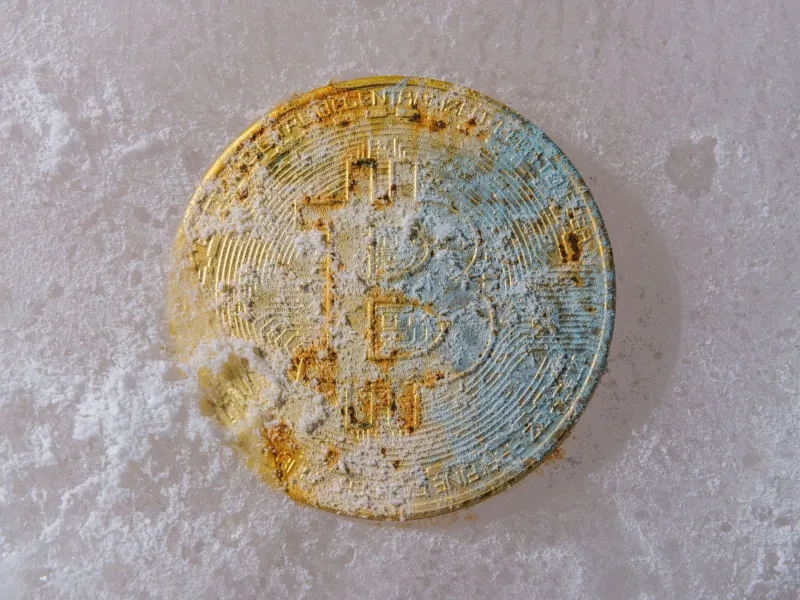
For many American investors who entered virtual asset markets during the peak enthusiasm of 2021 and 2022, the assumption was straightforward: buy into a promising metaverse platform, hold through the volatility, and eventually exit at a profit. What those investors discovered—sometimes painfully—is that exiting is not simply a matter of deciding to sell. In metaverse markets, the ability to convert a digital asset into cash at a fair price is never guaranteed, and the conditions that strip away that ability can materialize faster than most portfolio frameworks are designed to handle.
This is the liquidity crisis that rarely earns a headline. It does not announce itself with a dramatic price collapse or a platform shutdown. Instead, it arrives quietly, through the gradual erosion of buyer interest, the narrowing of order book depth, and the structural quirks of markets that were never built to support sustained two-sided trading.
The Illusion of Volume
The most common mistake investors make when assessing metaverse asset liquidity is equating reported trading volume with genuine market depth. Volume figures, particularly those published by platforms themselves, can be profoundly misleading. A single large transaction between two related wallets can inflate daily volume statistics while contributing nothing meaningful to the underlying market's ability to absorb a sell order from an ordinary holder.
Order book depth—the actual stack of resting buy orders at various price levels—tells a far more honest story. In the majority of metaverse land and NFT markets, that depth is alarmingly thin. It is not uncommon to find that removing even a modest position from a given virtual world's secondary market would require accepting price concessions of 30 to 50 percent simply to find enough willing buyers. For investors holding larger allocations, the situation is frequently worse.
Traditional financial markets have regulatory frameworks and market-maker obligations specifically designed to prevent this kind of structural fragility. Metaverse asset markets, operating outside those frameworks, carry no equivalent protections.
Platform Tokens and the Closed-Loop Trap
A second dimension of metaverse liquidity risk involves the role of platform-specific tokens. Many virtual worlds operate with native currencies—MANA in Decentraland, SAND in The Sandbox, and others—that function as the primary medium of exchange for assets within their ecosystems. This architecture creates a layered liquidity problem that investors often fail to fully appreciate.
To exit a virtual land parcel or in-world asset, an investor typically must first find a buyer willing to transact in the platform's native token, then convert that token to a major cryptocurrency such as Ethereum or Bitcoin, and finally move to a fiat off-ramp. Each of these steps introduces friction, cost, and additional liquidity risk. If the platform token itself is experiencing a period of low trading volume or widened spreads on centralized exchanges, the entire exit pathway degrades simultaneously.
This closed-loop dependency means that a deterioration in confidence in a specific metaverse platform can trigger cascading illiquidity across all asset classes within that ecosystem at once. The land parcel, the wearable NFT, and the platform token all become harder to exit at the same moment—precisely when investor urgency to exit is highest.
Concentrated Ownership and the Exit Door Problem
Perhaps the least-discussed driver of metaverse liquidity risk is the extraordinary concentration of ownership in most virtual world economies. On-chain data consistently reveals that a small number of wallets hold disproportionate shares of both virtual land and governance tokens across major platforms. In some cases, the top ten wallet addresses control more than 40 percent of all parcels in a given virtual world.
This concentration matters enormously for liquidity dynamics. When a handful of large holders collectively decide to reduce exposure—whether due to portfolio rebalancing, platform disillusionment, or simply capital needs elsewhere—the sell pressure they generate can overwhelm the thin buyer base that remains. Retail investors who had been observing stable or modestly declining prices can find themselves facing a market that has effectively ceased to function at any price close to recent transactions.
The 2023 and 2024 cycles demonstrated this pattern repeatedly across multiple metaverse platforms. Assets that had traded at five and six-figure dollar equivalents during peak periods became virtually unsellable at fractions of those values—not because buyers had disappeared entirely, but because the remaining buyers understood the structural imbalance and priced their offers accordingly.
Metrics That Actually Measure Liquidity Risk
Given the inadequacy of headline volume figures, investors need a more rigorous toolkit for evaluating liquidity conditions before committing capital to virtual asset markets.
Bid-ask spread as a percentage of asset price is one of the most direct indicators available. Spreads exceeding 10 to 15 percent of the midpoint price signal a market where immediate liquidation will come at a significant cost. In healthy liquid markets, spreads are measured in fractions of a percent.
Order book depth at various discount levels provides a concrete estimate of how much capital could be recovered if a position needed to be exited within a specific timeframe. Investors should examine how many dollars of resting buy orders exist within 5, 10, and 20 percent of the current asking price.
Holder concentration ratios, available through blockchain analytics tools, reveal the distribution of ownership and the potential for coordinated or simultaneous large-scale selling. A Gini coefficient applied to wallet distribution can quantify this risk in a single metric.
Days-to-liquidate estimates, calculated by dividing a position's total value by the average daily absorbed volume at reasonable price concessions, translate abstract liquidity conditions into practical exit timelines. An asset that would require 180 days to exit without severely moving the market carries a fundamentally different risk profile than one that could be liquidated in a week.
Building a Liquidity-Aware Position Framework
For investors who wish to maintain exposure to metaverse assets without accepting unquantified liquidity risk, several structural adjustments are worth considering.
Position sizing relative to average daily absorbed volume—rather than total portfolio value—forces a discipline that prevents any single illiquid holding from dominating exit risk. A reasonable starting framework limits any individual metaverse position to no more than five to ten percent of the average daily buyer-side volume observed over the prior 30 days.
Maintaining diversification not just across platforms but across asset types within platforms also reduces correlated liquidity risk. Land parcels, wearables, and in-world utility assets often respond differently to the same market stress event, providing some degree of exit optionality when conditions deteriorate.
Perhaps most importantly, investors should resist the temptation to treat reported floor prices as reliable estimates of exit value. The floor price represents the lowest asking price, not the price at which a meaningful quantity of assets could actually be sold. These two figures can diverge dramatically in thin markets.
The Structural Reality of Immature Markets
Metaverse asset markets remain, by any objective measure, structurally immature. The infrastructure for sustained institutional participation—reliable price discovery, meaningful market-making, standardized liquidity metrics—is still nascent at best. Until that infrastructure matures, retail investors bear the full weight of liquidity risk in ways that are rarely made explicit at the point of purchase.
Recognizing this reality is not an argument against participation in virtual asset markets. It is an argument for participation on terms that account honestly for the costs and constraints of exit. Investors who build liquidity analysis into their due diligence process before acquiring metaverse assets will be far better positioned to navigate the inevitable periods when markets seize—and far less likely to find themselves frozen in place when they most need to move.