Dead Wallets and Lost Keys: The Urgent Case for Digital Asset Estate Planning
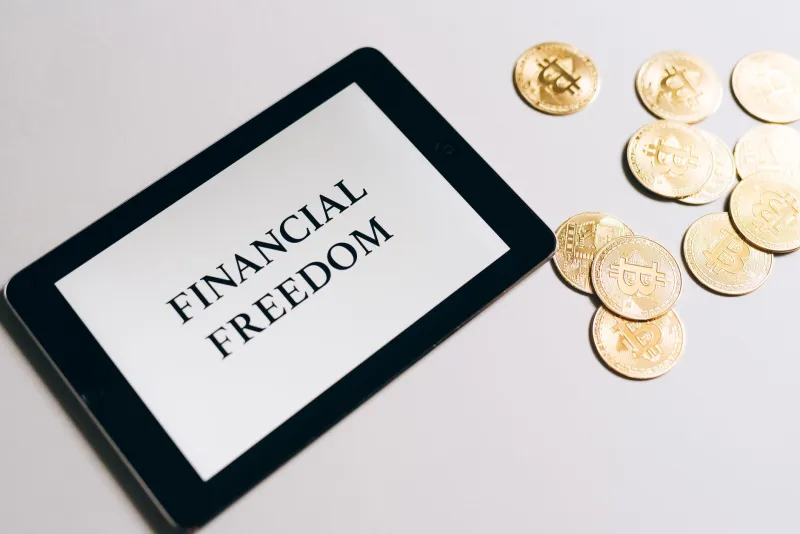
American investors have spent years accumulating digital wealth — NFTs, cryptocurrency holdings, virtual land parcels, and Web3 assets of every conceivable variety. Yet a striking number of those same investors have made no meaningful provisions for what happens to those assets when they are no longer around to manage them. The result is a slow-motion inheritance crisis unfolding across the blockchain ecosystem, one that threatens to permanently destroy value that took years to build.
Unlike a brokerage account or a savings bond, a digital asset does not transfer automatically upon death. It does not notify a bank. It does not trigger a probate process. Without the correct private keys, seed phrases, or wallet access credentials, even the most valuable NFT collection or cryptocurrency portfolio becomes permanently inaccessible — locked inside cryptographic infrastructure that has no override mechanism and no customer service department.
Why Traditional Estate Planning Falls Short
Conventional estate planning tools — wills, trusts, beneficiary designations — were designed for a world of custodied assets. A traditional brokerage account, for example, can be transferred to a named beneficiary through a straightforward legal process because the institution holding the assets can verify identity and execute the transfer on behalf of the estate.
Decentralized assets operate under an entirely different logic. Ownership is defined by possession of a private key, not by any institution's record. A will that states "I leave my NFT collection to my daughter" is legally meaningful in theory but practically useless if the executor cannot access the wallet in which those NFTs reside. Courts in the United States are only beginning to grapple with the jurisdictional and technical complexities of digital asset inheritance, and existing probate frameworks offer limited guidance.
This gap is not a minor administrative inconvenience. According to Chainalysis estimates, somewhere between three and four million Bitcoin — worth hundreds of billions of dollars at current valuations — may already be permanently lost, a significant portion due to the deaths of holders who left no access instructions behind. NFTs and other Web3 assets face the same fate at an accelerating pace as adoption grows.
Multi-Signature Wallets as an Inheritance Tool
One of the most technically sound solutions available to US investors today is the multi-signature wallet structure. In a standard single-key wallet, one private key controls all assets. In a multi-signature arrangement, access requires approval from a defined number of keyholders out of a larger group — for example, two out of three designated parties.
For estate planning purposes, this architecture is powerful. An investor might configure a wallet requiring signatures from themselves, a trusted family member, and an attorney or digital asset custodian. In the event of the investor's death or incapacitation, the remaining keyholders can execute transactions and facilitate the transfer of assets without any single party having unilateral access during the investor's lifetime.
Forward-thinking collectors are increasingly adopting this model, treating multi-sig wallets not merely as a security measure but as a succession planning instrument. The configuration requires careful setup and ongoing maintenance, but it provides a degree of structural protection that no handwritten password list can match.
Legal Frameworks Are Beginning to Catch Up
Several US states have taken legislative steps toward recognizing digital assets within existing estate frameworks. The Revised Uniform Fiduciary Access to Digital Assets Act, adopted in various forms across dozens of states, provides executors and trustees with legal standing to request access to digital accounts and assets. However, the decentralized nature of self-custodied wallets means that legal standing alone is insufficient without the underlying technical access.
Attorneys specializing in digital asset law recommend a layered approach. The first layer is legal documentation: an updated will or revocable living trust that explicitly names digital assets and designates beneficiaries. The second layer is technical documentation: a secure, regularly updated record of wallet addresses, custody arrangements, and access instructions stored in a location accessible to an executor or trustee. The third layer is structural: using custody solutions or multi-sig arrangements that do not depend solely on the investor's individual key possession.
Some investors are also turning to regulated digital asset custodians — firms that hold assets on behalf of clients under institutional-grade security protocols — as part of their inheritance strategy. While self-custody remains the philosophical preference within much of the Web3 community, partial custodianship of estate-designated assets offers a pragmatic middle ground for those prioritizing transferability.
NFT-Specific Complications
NFTs introduce estate planning challenges that go beyond wallet access. Many NFT assets carry embedded smart contract terms governing royalties, licensing rights, or platform-specific utilities. An heir who receives an NFT may inherit the token itself but not fully understand the rights and obligations attached to it — or may find that certain utilities expire or become inaccessible without the original account credentials tied to a specific platform.
Creators face an additional layer of complexity. An artist who has minted an ongoing NFT collection may have royalty streams, collaborative agreements, and intellectual property considerations that extend well beyond the blockchain record of ownership. Digital asset estate planning for creators requires coordination between legal counsel, technical advisors, and platform-specific policies that are still evolving.
For collectors holding high-value NFTs — particularly those tied to blue-chip projects where floor prices run into the tens of thousands of dollars — the stakes are proportionately higher. A single mishandled transfer, or an asset locked in an inaccessible wallet, can represent a loss equivalent to a significant portion of a traditional investment portfolio.
Practical Steps for US Investors
Investors who have not yet addressed digital asset succession should consider taking the following concrete steps.
First, conduct a full inventory of all digital holdings — wallets, exchange accounts, NFT platforms, DeFi positions, and any other Web3 assets — and document their approximate values and locations. Second, consult an attorney with demonstrated experience in digital asset law to ensure that existing estate documents explicitly address these holdings. Third, evaluate whether current wallet structures are compatible with inheritance goals, and consider transitioning high-value holdings to multi-sig arrangements or regulated custodians as appropriate. Fourth, establish a secure method for communicating access credentials to a designated trusted party — not through email or unsecured cloud storage, but through physical documentation stored in a secure location such as a safe deposit box or a fireproof home safe.
Finally, treat this as a living process rather than a one-time exercise. As digital portfolios evolve — new assets acquired, old ones sold, wallet configurations changed — estate documentation must be updated accordingly.
The Cost of Inaction
The decentralized ethos of Web3 places enormous power in the hands of individual asset holders. That power is a feature, not a bug — but it carries a corresponding responsibility that many investors have yet to fully internalize. Assets that cannot be transferred are not truly owned; they are merely borrowed from the void.
The investors best positioned to preserve generational digital wealth are those who recognize that technical ownership and legal transferability are two distinct problems requiring two distinct solutions. Solving only the first while ignoring the second is a plan that ends, eventually, in loss.